
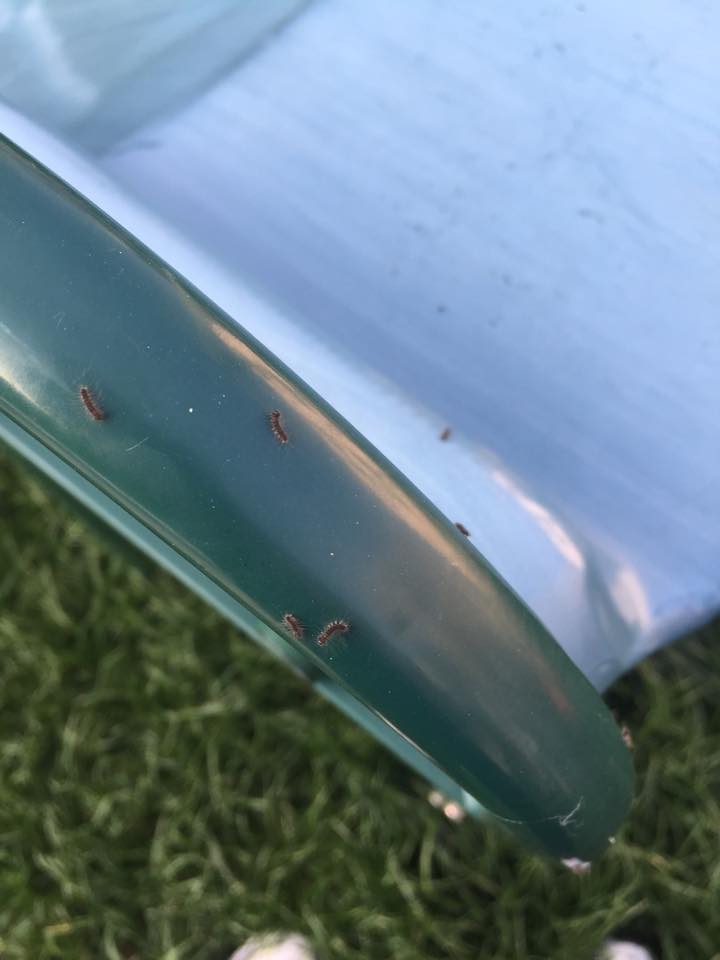
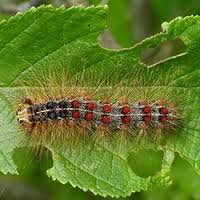
Early last week, a new little critter began being sighted around Schuylkill and Carbon counties. An itty-bitty black caterpillar barely 3-4 mm in length. With its voracious appetite, it will feed on the leaves of various deciduous trees, and grow to a length of about 1.5 inches by June. It is the larvae stage of the Gypsy Moth. The Gypsy Moth caterpillar has been an unwanted visitor for many decades, and without human control methods can defoliate a forest in one season and in several seasons finally kill the trees in an area. The last major infestation was in 1990 and the years surrounding. Since that time, the Pennsylvania Department of Conservation and Natural Resources (DCNR), working in conjunction with the U.S. Forest Service, have had systems in place to provide spraying programs. The pest has been kept at bay for quite some time, but apparently is making a comeback.
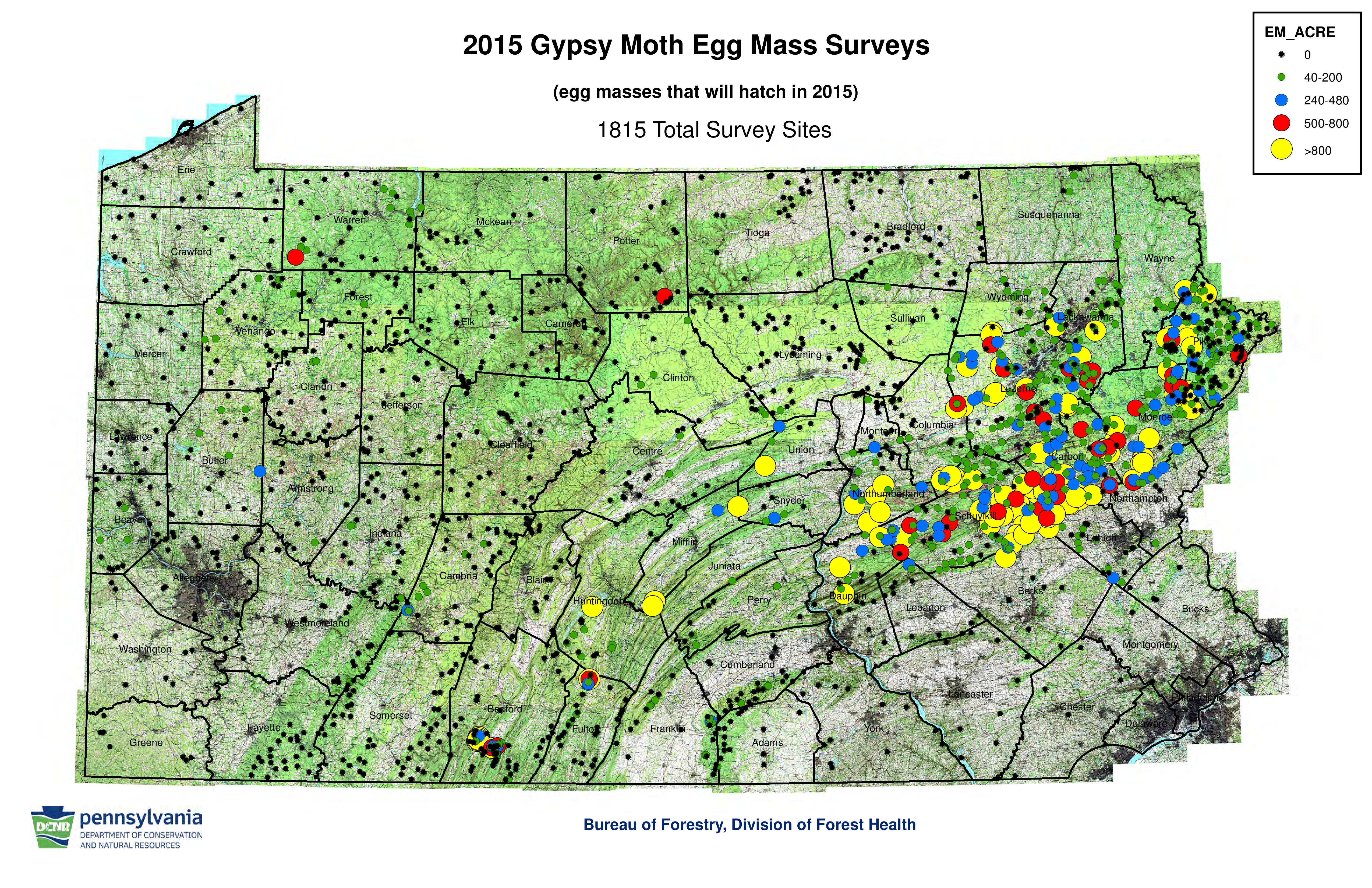
The DCNR website (www.dcnr.state.pa.us/forestry/insectsdisease/gypsymoth) provides much information that can be accessed by the public, such as predicted areas of infestation year to year, past and present control programs and results, life cycles and other entomological information, as well as information for land owners with regard to prevention and control. Particularly interesting is the map showing the surveyed amounts of egg masses counted this year. Eastern Schuylkill County and Western Carbon County are within the most dense concentration of egg masses with >800 masses per acre. Each egg mass hatches hundreds of caterpillars.
Many people across the area have been complaining of suspicious minor itching and rashes, especially in children who have been playing out of doors. While many cases are not connected to the Gypsy Moth caterpillar, many others may well be. Gypsy Moth caterpillars do not bite, but the tips of the tiny hairs of the caterpillars have an irritant on them, the purpose of which is to make the caterpillars extremely distasteful to predators. Obviously the method protects them well, as officials say the pest will never be completely eradicated even with pesticide use. The tiny hairs can cause an allergic reaction in some people, ranging from mild itch to more intense itching and rashes. It is extremely rare for there to be any serious complications from the reaction, and is treated the same as any other contact dermatitis such as Poison Ivy. Either way, it is recommended to see a doctor in case of allergic reactions, infections or other complications.
Gypsy Moths are not native to America and originated in Europe. They were introduced in Boston by an amatuer entomologist in 1869 as part of an experimental attempt to breed and maintain a “silkworm” industry. His enclosures overturned during a storm, releasing the bugs into the wild and they have since slowly spread across the country.
Click HERE to view a 2015 Gypsy Moth Spray Status Interactive Map via DCNR website.
Click HERE to download a 2015 Gypsy Moth Spray Maps – courtesy of DCNR website.
Click HERE to download a Homeowners Guide To Gypsy Moth Management – courtesy of DCNR website.

 TamaquaArea.com
You must be logged in to post a comment.