
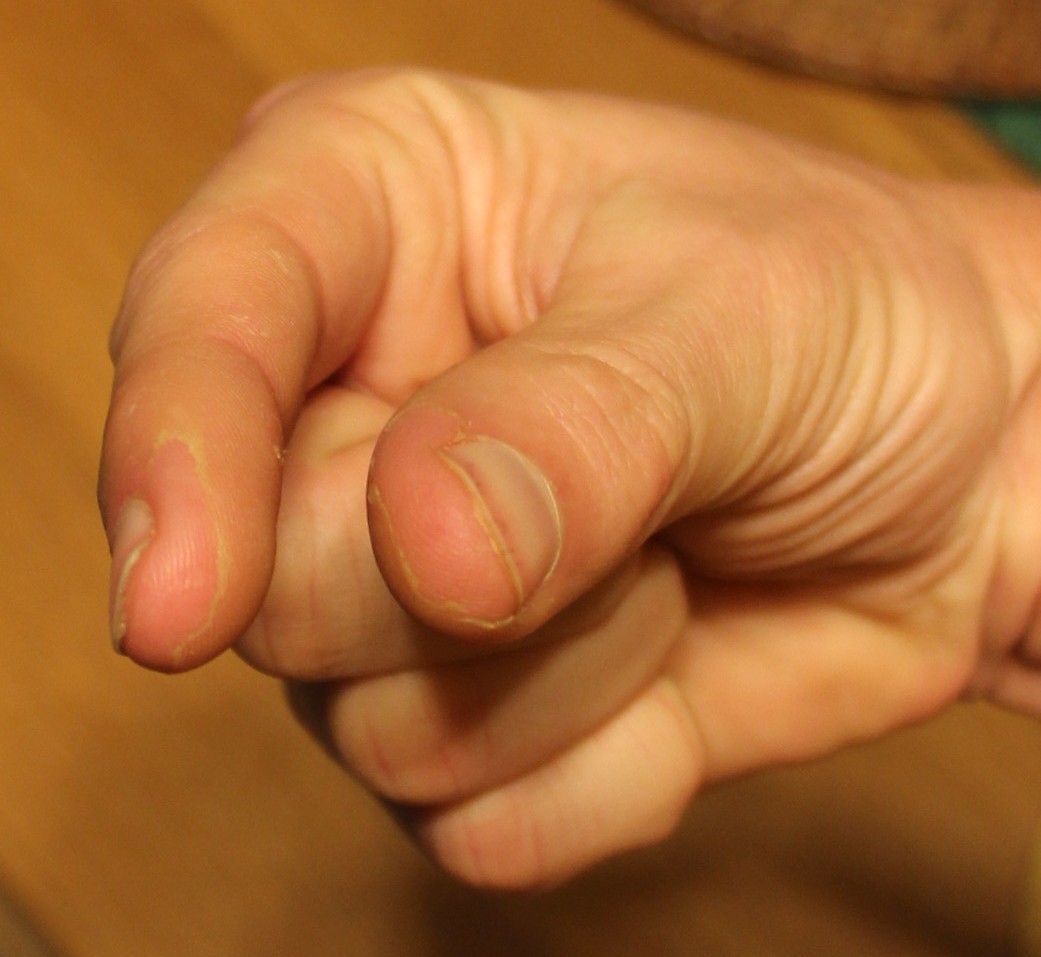
Do your fingers turn pale white or blue and stay that way for more than a few minutes? If so, then you probably have Raynaud’s Phenomenon.
The phenomenon is triggered by quick changes in temperature (whether it be cold or warm), stress or other factors.
Wikipedia explains Raynaud/Raynaud’s as an excessively reduced blood flow in response to cold or emotional stress, causing discoloration of the fingers, toes, and occasionally other areas. This condition may also cause nails to become brittle with longitudinal ridges. Named after French physician Maurice Raynaud (1834–1881), the phenomenon is believed to be the result of vasospasms that decrease blood supply to the respective regions.
Raynaud’s phenomenon by itself is just a sign (hypoperfusion) accompanied by a symptom (discomfort). When linked to pathogenesis, it can be part of Raynaud’s disease (also known as primary Raynaud’s phenomenon), where the cause is unknown, or part of Raynaud’s syndrome (secondary Raynaud’s phenomenon), which is a syndrome caused by a known primary disease, most commonly connective tissue disorders such as systemic lupus erythematosus. Measurement of hand-temperature gradients is one tool used to distinguish between the primary and secondary forms.
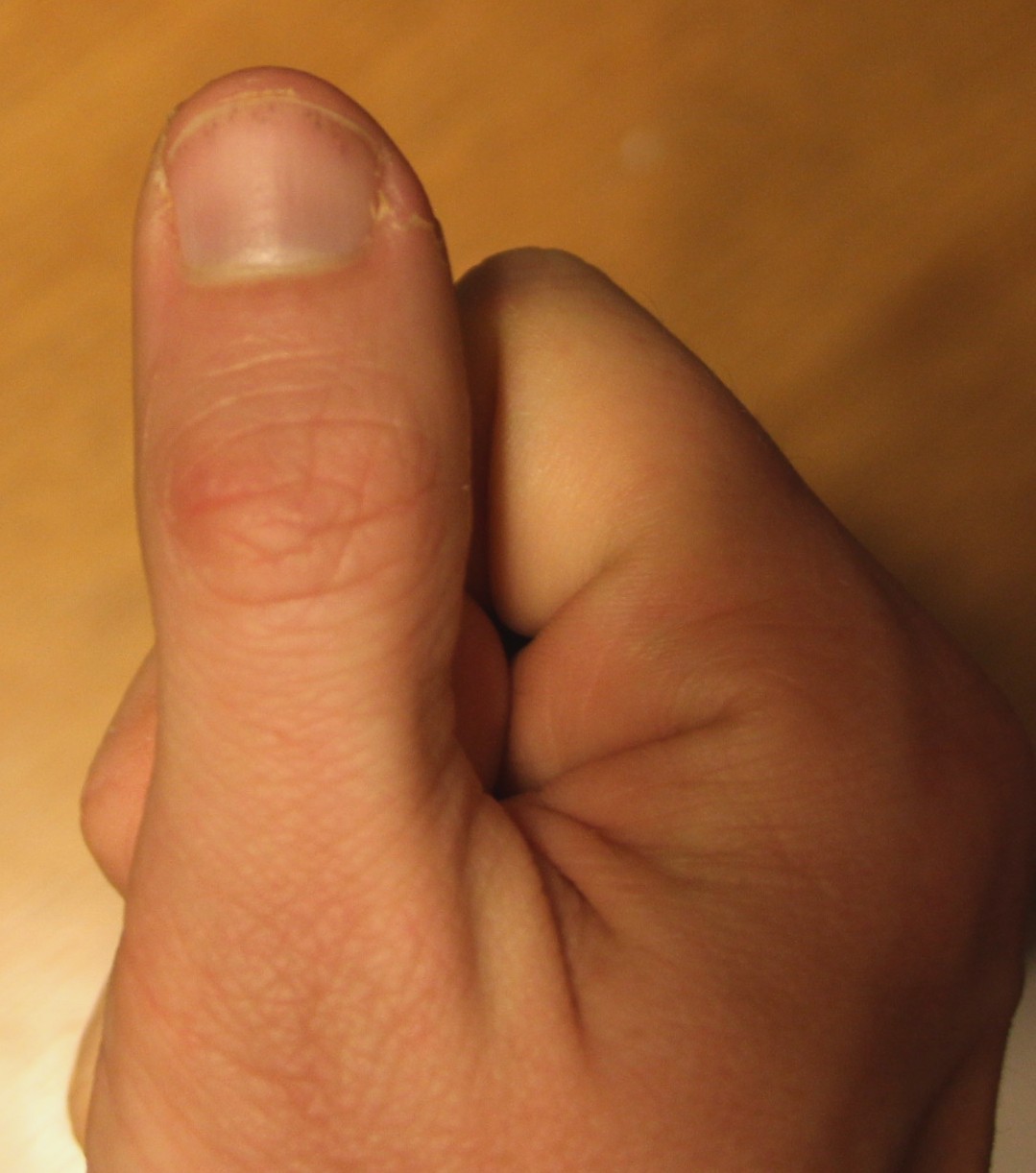
It is a hyper-activation of the sympathetic nervous system causing extreme vasoconstriction of the peripheral blood vessels, leading to tissue hypoxia. Chronic, recurrent cases of Raynaud phenomenon can result in atrophy of the skin, subcutaneous tissues, and muscle. In rare cases, it can cause ulceration and ischemic gangrene.
 TamaquaArea.com